Improvising a Simple Connect-to-Call Journey
Rethinking Mobile Calling Through Human-Centered UX + AI
Purpose: Transform failed calls into seamless, intelligent experiences
Audience: Mobile UX designers, product managers, accessibility specialists
Making a phone call should be effortless. Yet real-world interruptions—busy lines, dropped signals, silent failures—create frustrating gaps in the user journey.
The Broken Caller Journey
Current flow: Unlock → Dial → FAIL → Manual retry (if user remembers).
80% abandon redials after connection failures.
| Current UX | AI-Enhanced UX |
|---|---|
| Busy signal → hang up | "Redial when available?" |
| No reception → wait | Smart retry + notification |
| Silent drop → confusion | Contextual recovery prompt |
Inclusive Design: Aging Users Need Proactive Systems
Research (n=35, 66% over 50) shows working memory decline makes manual recovery harder. Systems must anticipate intent, not rely on user recall.
"Good UX doesn't ask users to remember. It remembers for them."
AI-Powered Call Continuity
Smart Redial
Failed call → "Would you like me to retry when available?"
Context Detection
Busy/no-signal → learns user preferences over time
Voice Recovery
"Call didn't connect. Say 'retry' or 'cancel'"
Keypad UX Fixes
Problem: Backspace icon violates proximity heuristic (far from number pad).
Fix: 73/81 users want backspace beside numeric keys.
Final Thoughts and Experience Amendments
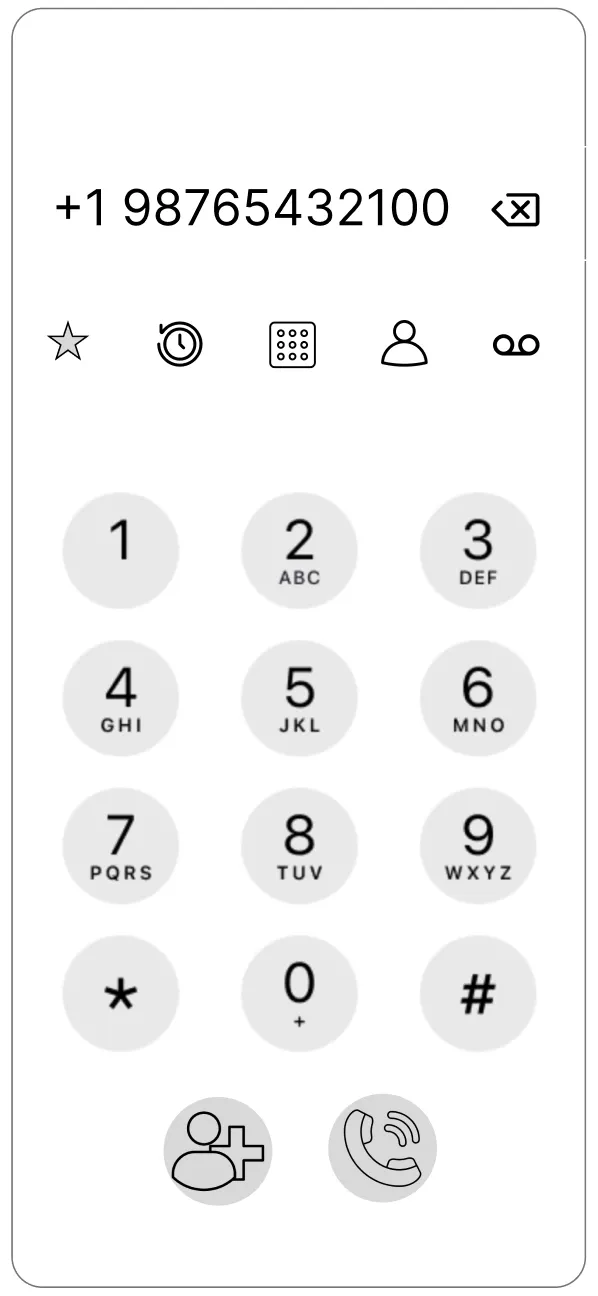
Amendment 1: Keypad Layout
Current backspace placement violates proximity heuristic. 73/81 users prefer backspace beside numeric keys (Gestalt principle).
Amendment 2: AI Redial
Usability research indicates that 80% of users do not initiate a redial after a call drop or connection failure, highlighting a significant break in task continuity and a missed opportunity for task completion support.
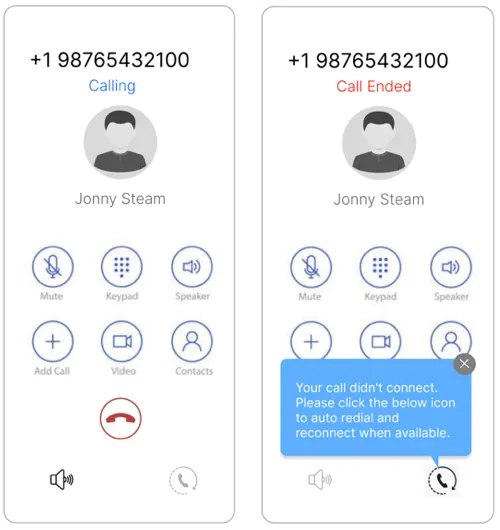
WhatsApp Opportunity: Voice Calls with AI Redial + Keypad Fix.
June 3, 2025 • 4 min read
💬 Reader Feedback (0)